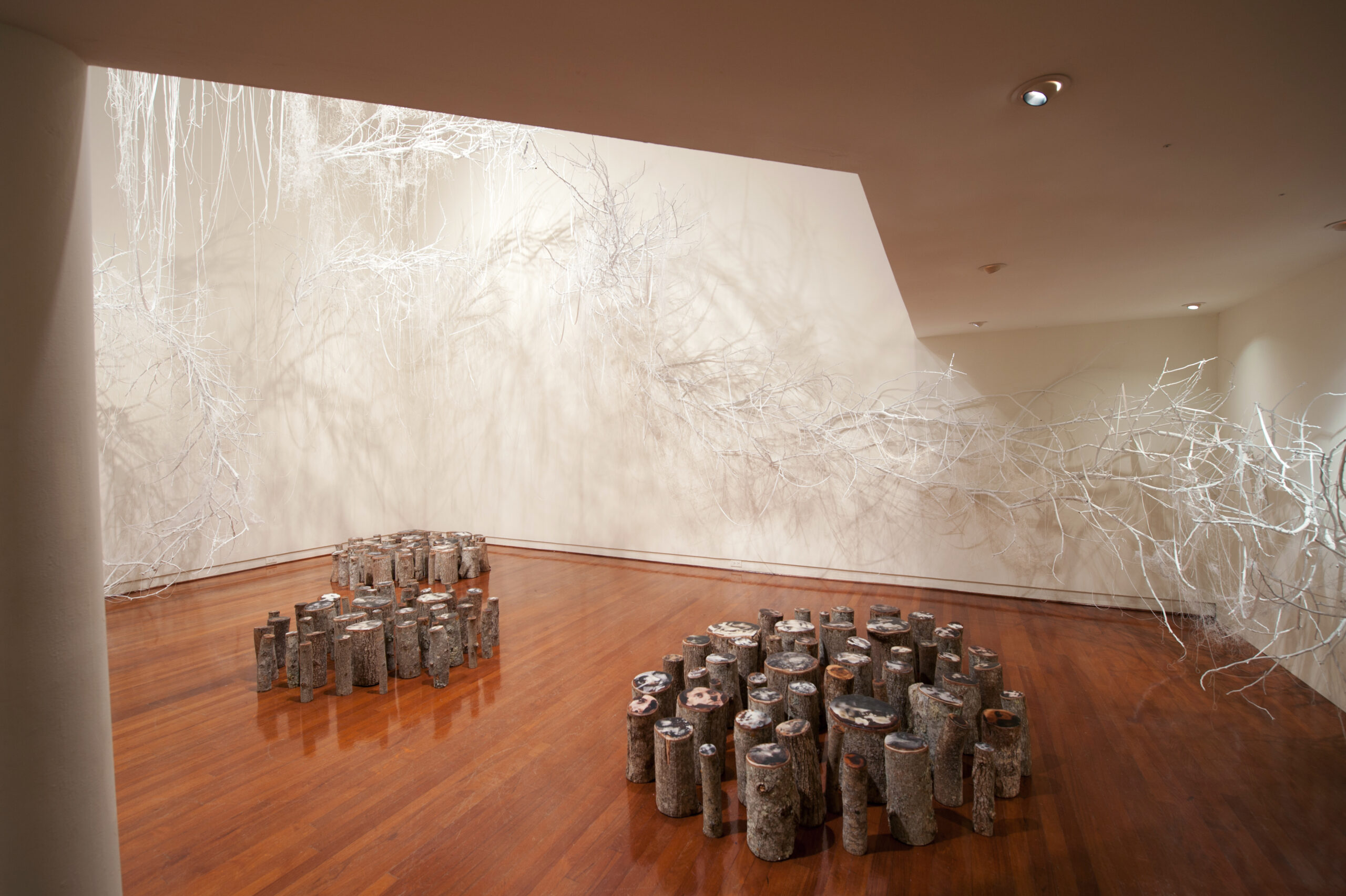
the disappearing place grew from childhood memories of trees as places of shelter and as markers of family history. Throughout periods of change and loss, planting trees has been a constant in my family, marking births, deaths, marriages, and other significant moments. Those trees become living connections to people and places, even as circumstances change.
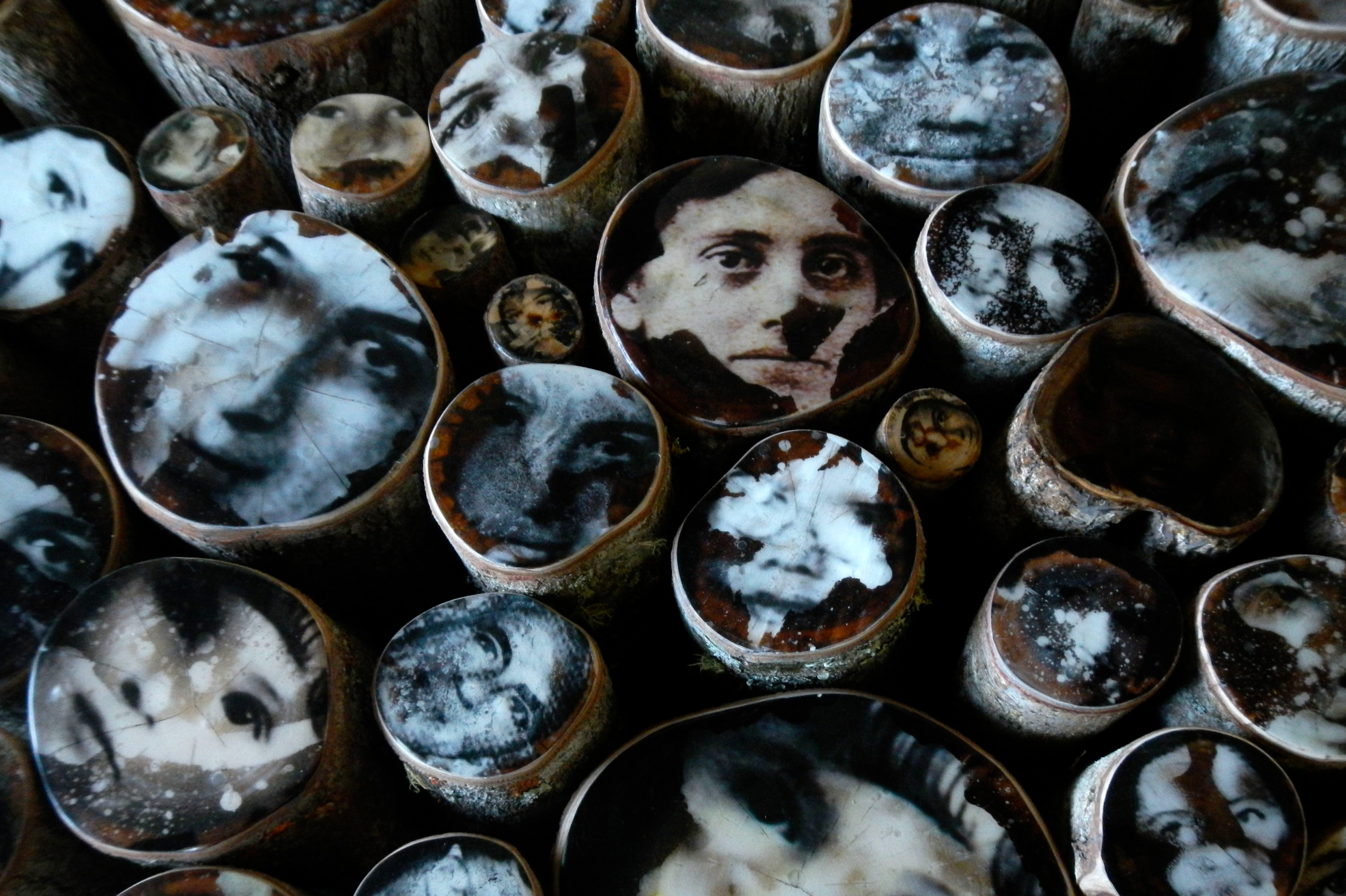
The installation began with a fallen koa tree on our family homestead in Paʻauilo, Hawaiʻi. I cut the tree into sections, working on each log individually, layering photographic portraits drawn from a collection I had gathered over many years—family photographs, images given to me, and others found or discarded. The resulting 170 logs were arranged in clusters across the gallery floor.
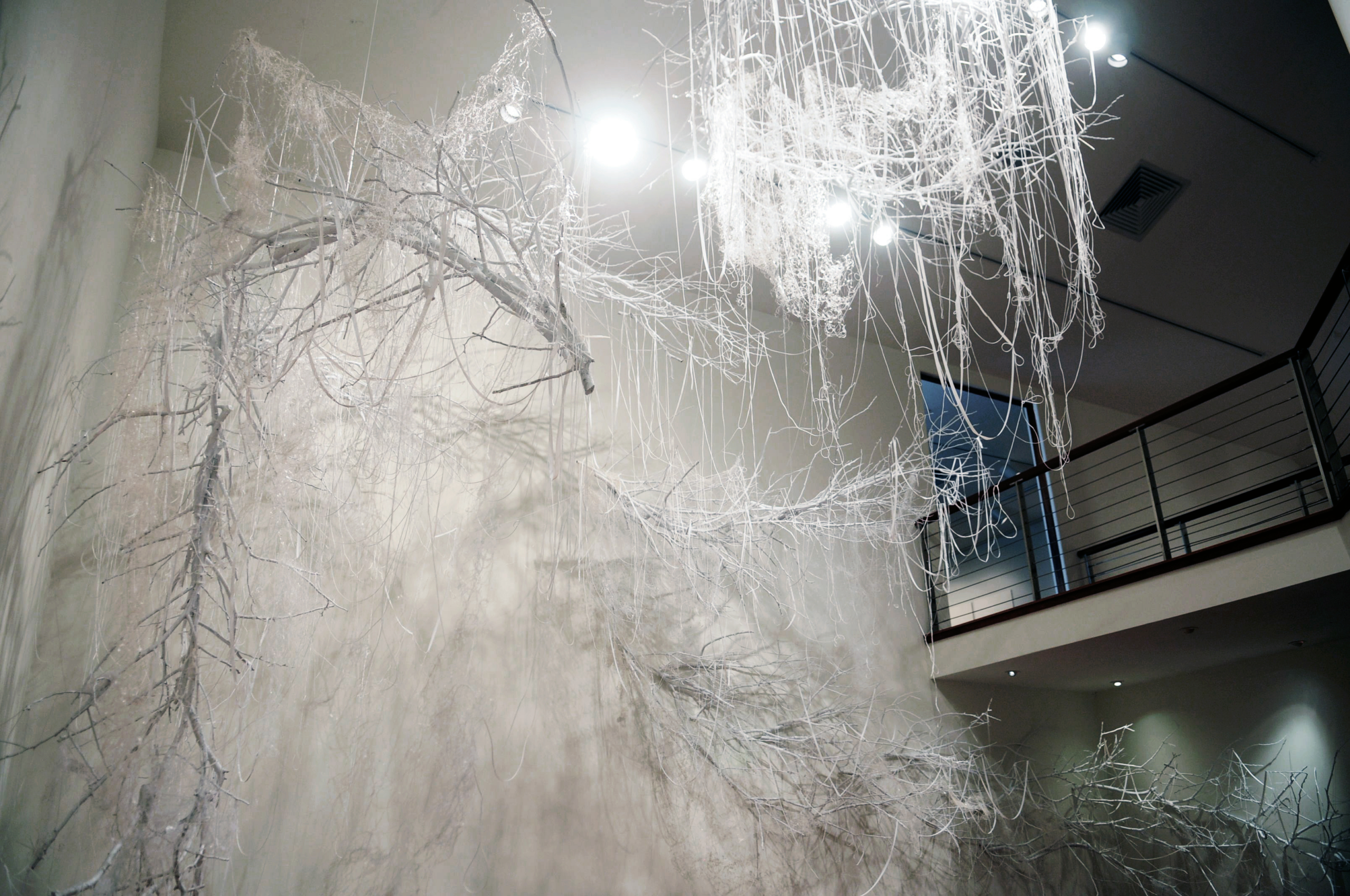
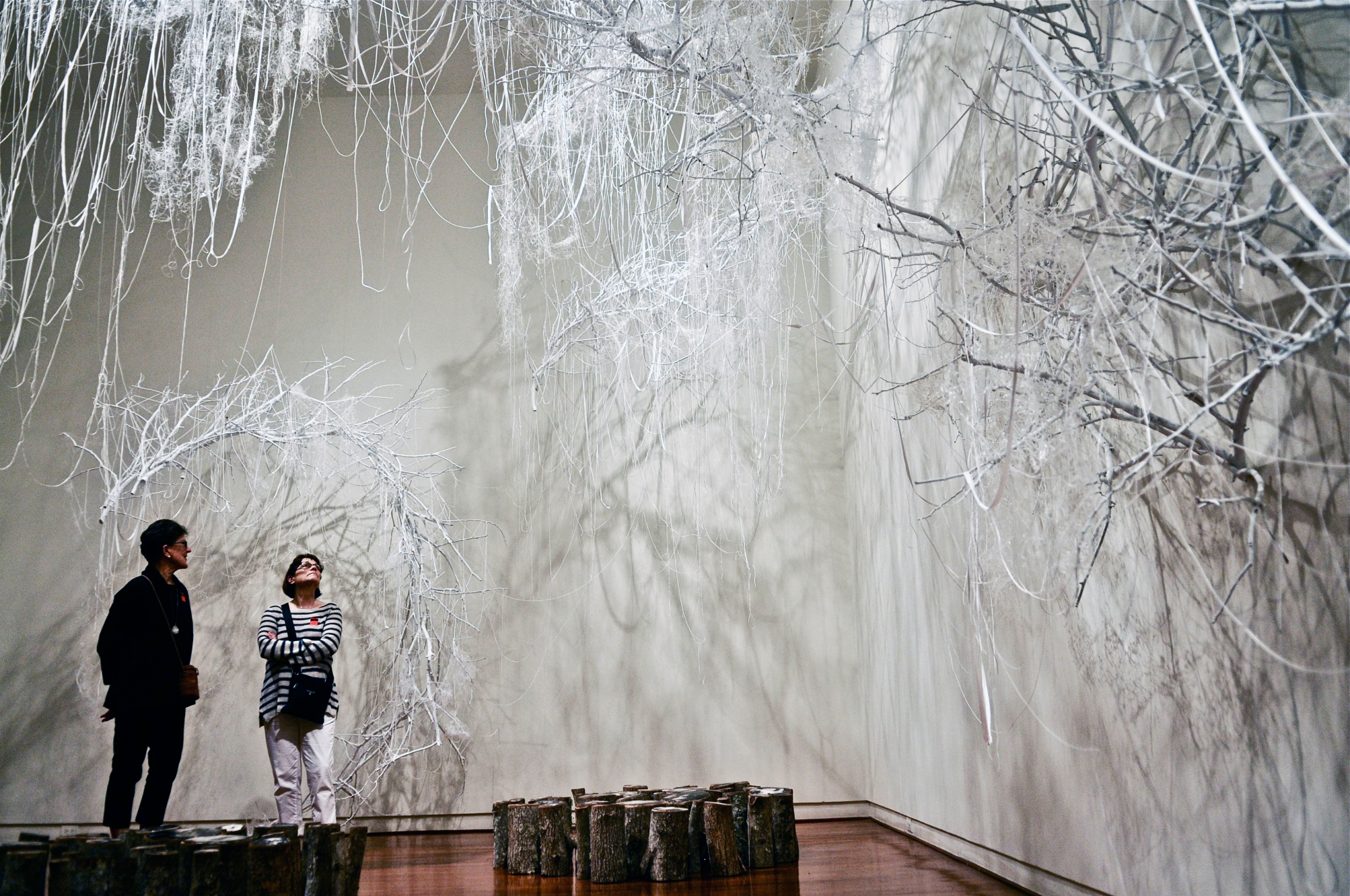
Above them, more than 500 branches, spray-painted white, were joined with hundreds of plastic zip ties and a network of knotted flagging tape, a material commonly used to mark trees for removal. Suspended within the 22-foot-high gallery, the branches moved subtly with the air currents, casting shifting shadows across the walls.
the disappearing place reflects on memory, belonging, and the relationships between people and place. It considers what remains and what disappears, and the ways shelter, vulnerability, fragility, and resilience shape our understanding of home and community.
the disappearing place
2012
Koa logs, archival photographic portraits printed on silk, resin, painted branches, string, and mixed media
Site-specific installation, dimensions variable
Biennial of Hawaiʻi Artists X
Honolulu Museum of Art, 2012
Ellen Choy Craig Award